Introduction
Traveling with your dog creates wonderful memories, but unfamiliar surroundings also introduce new risks. A hotel door can open unexpectedly, a campsite can have an unsecured boundary, or a dog can become distracted on an unfamiliar hiking trail. That is why choosing the best GPS dog trackers for traveling is more than a convenience. It can be an important part of responsible pet travel.
Modern dog trackers are not all built the same. Some use cellular networks to provide live location updates almost anywhere there is mobile coverage. Others use Bluetooth and nearby smartphones to help locate a pet. More specialized systems are designed for remote environments where cellular service may disappear completely.
The right choice depends on where you travel, how your dog behaves outdoors, how long you will be away, and how much maintenance you are willing to handle. Understanding those differences makes it much easier to choose a tracker that will actually help when you need it.
Why GPS Tracking Matters When Traveling With a Dog
At home, your dog is familiar with the neighborhood, smells, routes, and boundaries. Travel changes all of that. Even a normally reliable dog can behave differently in a new environment.
A tracker gives you another layer of protection if your dog gets loose. Depending on the technology, you may be able to see a current location, follow movement, receive an escape alert, or identify a nearby location where the tracker was recently detected.
However, a tracker should never be treated as a replacement for an ID tag, microchip, leash, secure carrier, or good recall training. Its value comes from adding another safety layer.

The most important question is not simply whether a tracker uses GPS. It is how the tracker communicates that GPS location back to you.
Understanding the Main Types of GPS Dog Trackers
Cellular GPS Dog Trackers
Cellular trackers combine GPS positioning with a mobile network. The device determines your dog’s location using satellite positioning and then sends that information through cellular connectivity to an app on your phone.
This is why cellular trackers can offer effectively unlimited range within supported network coverage. Your dog does not need to remain close to your phone.
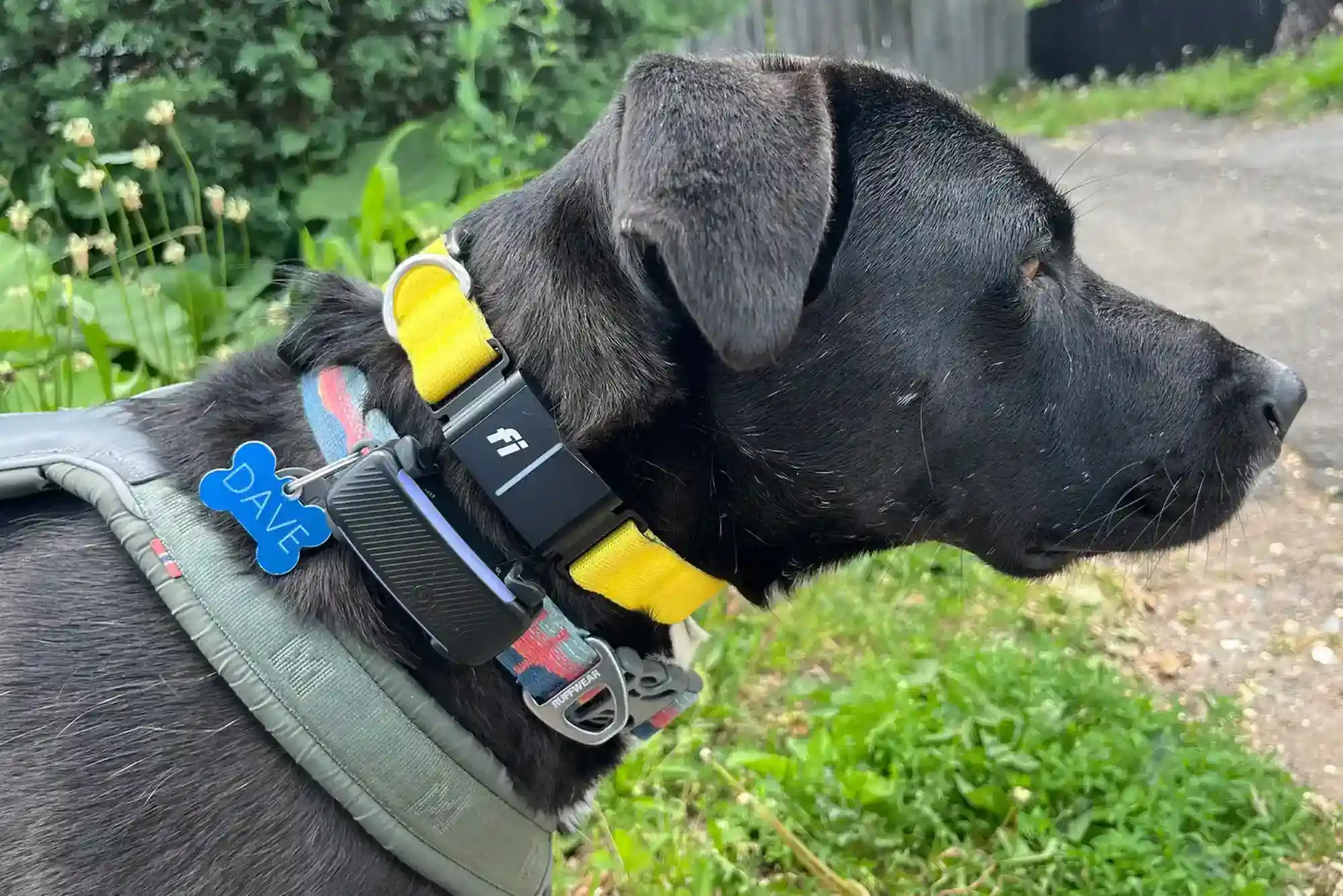
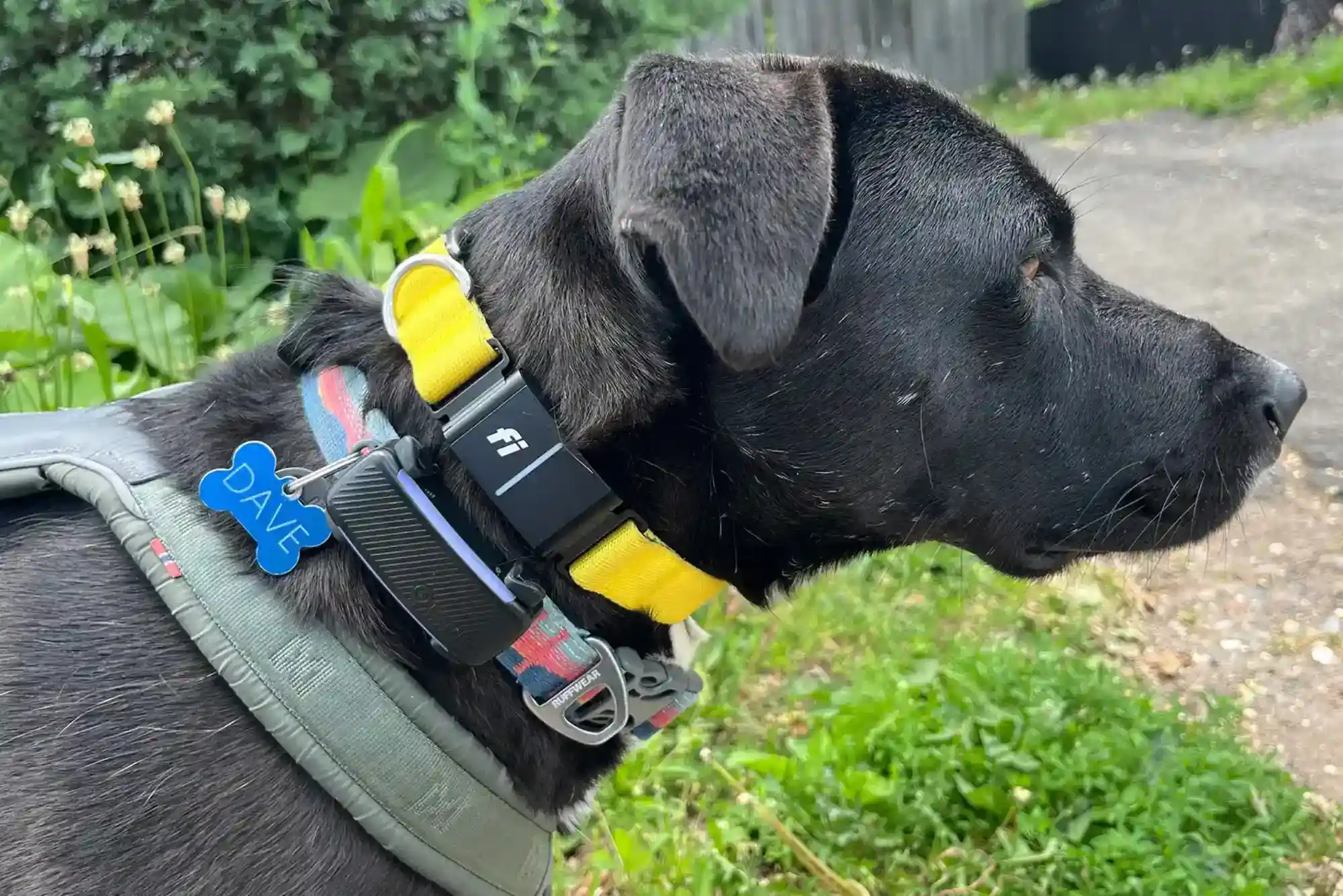
For ordinary vacations, road trips, city travel, and many hiking destinations, this can be extremely practical. Current cellular trackers such as Tractive and Fi use cellular connectivity alongside GPS, although their coverage, subscription models, and supported regions differ.
The main weakness is obvious: if your dog goes somewhere without usable cellular coverage, live tracking may be limited or unavailable.
Bluetooth Trackers
Bluetooth trackers work differently. Rather than continuously communicating with a cellular network, they rely on Bluetooth and, in some cases, a wider crowd-location network.
An Apple AirTag is a familiar example. It can be useful for identifying a recently detected location, particularly in populated areas where compatible smartphones are nearby.
But a Bluetooth tag should not be confused with a dedicated live GPS dog tracker. It generally cannot provide the same continuous location experience as a cellular GPS device.
For travel, Bluetooth is often best viewed as an inexpensive backup layer rather than your only tracking solution.
Satellite and Off-Grid Tracking
Remote adventures require a different approach. If your travel plans involve isolated mountains, wilderness areas, or places with little or no cellular coverage, a conventional cellular tracker may not be enough.
Satellite-connected pet tracking is an emerging category, while specialized radio-based systems such as Garmin’s Alpha ecosystem have long served hunters and backcountry users. These technologies should not be lumped together because satellite connectivity and VHF radio tracking work differently.
Radio systems can communicate directly with a compatible handheld receiver without relying on a cellular network. Satellite-connected devices attempt to use satellite communications where cellular networks are unavailable.
For genuinely remote travel, understanding the communication method is more important than simply seeing the word “GPS” on the packaging.
What Makes the Best GPS Dog Trackers for Traveling?
Reliable Location Updates
A good travel tracker should provide useful location information when your dog moves away from you.
Cellular models are particularly convenient because the location can normally be viewed through a smartphone app. Some offer a live tracking mode with frequent updates, which can be valuable during an active search.
Remember that frequent updates consume more battery. A tracker that advertises excellent battery life under normal conditions may last considerably less when continuously transmitting locations.
Coverage Where You Actually Travel
Coverage should be one of your first considerations.
A cellular tracker may work beautifully in a city but struggle in a remote mountain valley. A Bluetooth tracker may be helpful in a busy urban environment but provide little assistance in an isolated campsite.
If you travel internationally, also check whether the device supports the countries you plan to visit. Current travel-focused comparisons identify cellular coverage and international roaming as major considerations when choosing a tracker.
Battery Life
Battery life can make or break a travel tracker.
Before leaving home, fully charge the device and understand how long it lasts under your preferred tracking settings. If you expect long hikes, camping trips, or multi-day travel, consider a tracker with a larger battery or a practical charging routine.
Do not rely solely on the manufacturer’s maximum battery claim. Battery performance can change significantly with tracking frequency, network conditions, movement, temperature, and device settings.
Durability and Water Resistance
Dogs do not care about your expensive electronics. They will run through wet grass, jump into water, roll in mud, and squeeze underneath branches.
A travel tracker should therefore be designed to survive ordinary dog adventures. Look for sturdy construction and meaningful water resistance, especially if swimming or rainy-weather hiking is part of your itinerary.
Secure Attachment
A tracker is useless if it falls off.
Check whether the device attaches securely to your dog’s existing collar or comes as part of a dedicated smart collar. The attachment should remain stable when your dog runs, shakes, scratches, or moves through vegetation.
Before traveling, inspect the attachment point and practice using it at home.
Cellular vs. Bluetooth vs. Satellite for Travel
The three technologies solve different problems.
Cellular GPS is generally the most versatile choice for everyday travel because it can provide live location tracking over long distances wherever compatible cellular coverage exists. It is particularly useful for road trips, hotels, cities, beaches, parks, and ordinary hiking destinations.
Bluetooth trackers are simpler and usually cheaper. They can provide useful backup information, but their dependence on nearby devices makes them less suitable as the primary safety system for an adventurous dog.
Satellite or specialized off-grid systems become more attractive when your destination is beyond reliable cellular coverage. Their advantages come with additional equipment, cost, complexity, or shorter battery life depending on the technology.
There is no universal winner. The best GPS dog trackers for traveling are the ones whose communication technology matches the places you actually visit.
Best GPS Dog Trackers for International Travel
International travel requires extra attention because network compatibility matters.
A cellular tracker that works well in one country may have different coverage or service arrangements elsewhere. Before flying or driving across borders, confirm supported countries, roaming arrangements, subscription requirements, and local network compatibility.
Tractive is frequently positioned as an international travel option because its service uses cellular networks across many countries.
Fi, by comparison, has historically been more focused on the U.S. market, making regional coverage an important consideration for international travelers.
For an international trip, never assume that “GPS” means “works everywhere.” GPS positioning and cellular connectivity are separate parts of the system.
Best GPS Dog Trackers for Hiking and Camping
Hiking presents a different challenge from city travel.
If you stay on established trails within cellular coverage, a cellular tracker may be perfectly suitable. If you regularly venture into areas where phones lose service, however, consider an off-grid solution.
Garmin’s Alpha systems are designed around direct radio communication between compatible handheld devices and dog collars. That makes them fundamentally different from smartphone-based cellular trackers. They are particularly relevant to hunting and remote outdoor use.
For serious backcountry travel, also consider how you will recharge the equipment. A tracker with excellent theoretical coverage is not helpful after its battery reaches zero.
How to Get the Most From Your Dog Tracker
Before your trip, attach the tracker to your dog’s collar and test it around your home. Open the app, check the location, test alerts, and become familiar with the tracking interface.
Create a routine for charging it before every travel day. If you are staying at hotels, make sure the tracker remains attached whenever your dog leaves the room.
It is also smart to keep your dog’s microchip registration and identification details up to date. A tracker helps you locate the dog; an ID tag and microchip help someone identify the dog if another person finds them.
For outdoor adventures, combine tracking technology with a physical leash, reliable recall, and appropriate supervision. Technology should strengthen your safety plan, not replace it.
Common Mistakes to Avoid
One common mistake is buying a tracker without checking network coverage. Another is assuming that every GPS tracker provides live location data.
Battery neglect is another frequent problem. Owners may charge a tracker before leaving home and forget that frequent live tracking can drain it faster.
Some travelers also choose a Bluetooth tag expecting it to behave like a cellular GPS tracker. Bluetooth devices can be useful, but they serve a different purpose.
Finally, do not wait until your trip begins to learn how the device works. A few minutes of practice at home can save valuable time during an actual search.
How Much Should You Spend on a Travel Dog Tracker?
The cost depends heavily on the technology.
Bluetooth tags are generally inexpensive and may not require a dedicated monthly tracking subscription. Cellular trackers usually have a lower hardware price but require an ongoing service plan. Specialized off-grid equipment can cost considerably more because it includes dedicated communication hardware.
The real cost is therefore the combination of purchase price, subscription fees, charging needs, accessories, and the level of coverage you require.
Instead of choosing the cheapest device, consider the consequence of choosing one that does not work in your normal travel environment.
Are GPS Dog Trackers Worth It for Travel?
For many traveling dog owners, the additional safety layer is worthwhile.
The biggest benefit is not that a tracker guarantees you will find your dog. No tracker can promise that. The benefit is that it can give you information that would otherwise be unavailable when your dog disappears from sight.
Cellular trackers are especially useful for everyday travel because they combine GPS positioning with smartphone connectivity. Bluetooth tags can provide affordable backup protection, while satellite or radio systems make more sense for genuinely remote adventures.
The key is choosing technology based on your destination rather than choosing a device simply because it has “GPS” in its name.
FAQs
What is the best GPS tracker for a dog?
The best tracker depends on where and how you travel. Cellular models are practical for everyday travel and areas with mobile coverage. Bluetooth tags work better as inexpensive backup devices, while radio or satellite-based systems are more suitable for remote areas without cellular service.
Can I track my dog with a GPS tracker without cell service?
It depends on the tracker. A conventional cellular GPS tracker generally needs cellular connectivity to send its location to your phone. Dedicated radio tracking systems can operate without cellular service, while satellite-connected products are designed for areas where cellular networks are unavailable.
Are Bluetooth trackers good for dogs?
Bluetooth trackers can be useful, particularly as a backup. However, they are not equivalent to dedicated cellular GPS trackers because they depend on nearby compatible devices or Bluetooth connectivity rather than continuously transmitting your dog’s location through a cellular network.
Do GPS dog trackers work internationally?
Some do, but international functionality varies. Check the manufacturer’s supported countries, cellular network arrangements, roaming policies, and subscription requirements before traveling abroad. Cellular coverage should never be assumed simply because a device uses GPS.
How long does a GPS dog tracker battery last?
Battery life varies substantially between models and usage conditions. Normal tracking may last days or weeks on some devices, while certain smart collars advertise much longer battery life under specific conditions. Frequent live tracking can reduce runtime significantly.
Can a GPS tracker replace a microchip or dog ID tag?
No. A GPS tracker is an additional safety tool. Your dog should still have a properly fitted collar, visible identification, and a registered microchip. These systems work together rather than replacing one another.
Choosing among the best GPS dog trackers for traveling becomes much easier once you understand the difference between cellular, Bluetooth, and satellite or off-grid technology.
For everyday vacations and road trips, cellular GPS trackers offer a strong combination of live tracking and smartphone convenience. Bluetooth devices can add inexpensive backup protection, especially in populated areas. For serious backcountry adventures, specialized radio or satellite connectivity may be more appropriate when cellular networks disappear.
Before your next trip, check coverage, battery life, subscription requirements, durability, and attachment security. Then test the tracker before you leave home.