
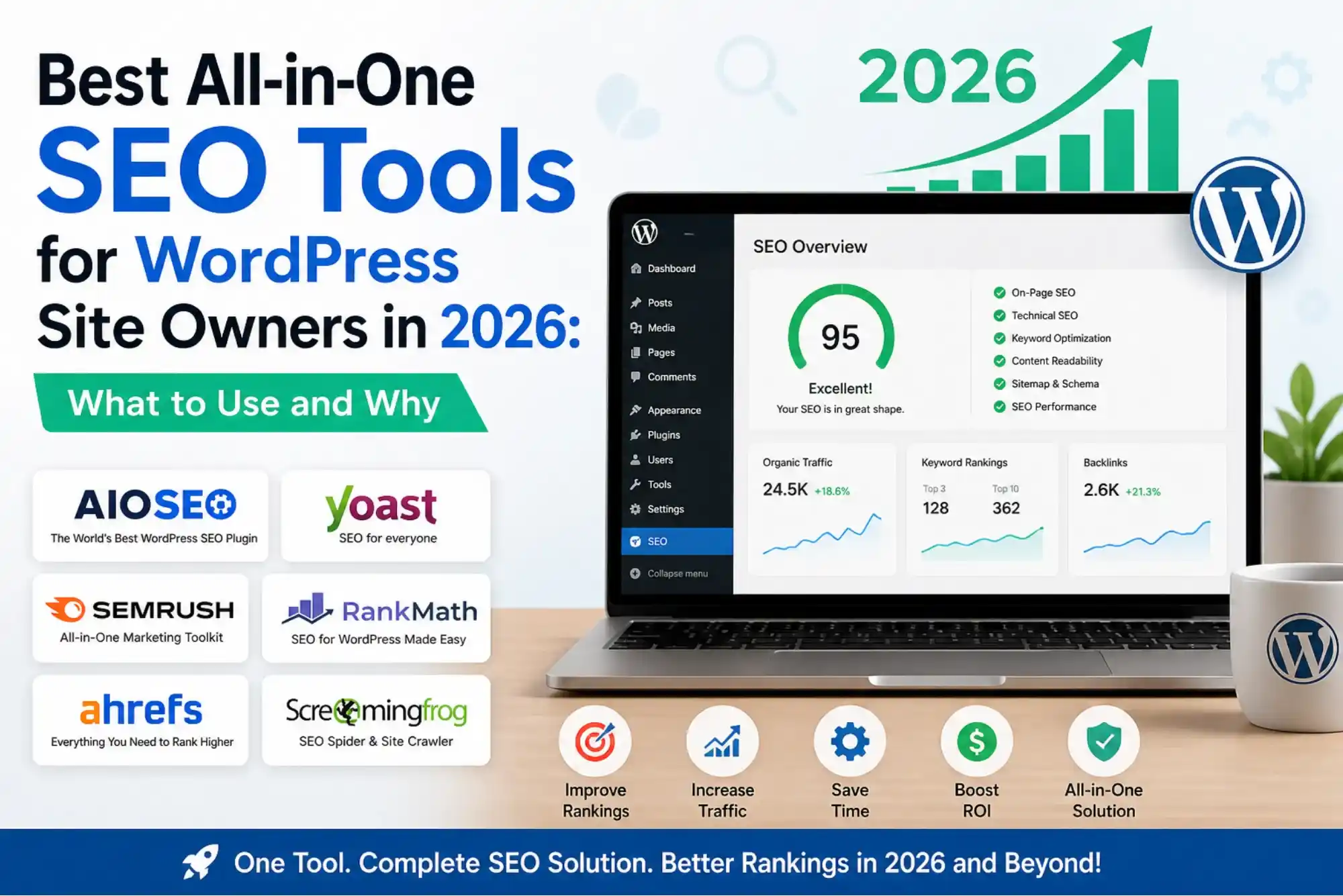
In 2026, WordPress site owners are no longer choosing SEO tools based on basic features alone. The landscape has evolved. Search engines prioritize user experience, topical authority, and technical performance—meaning your SEO toolkit must do more than optimize keywords.
The rise of all-in-one SEO tools has simplified what used to be a fragmented workflow. Instead of juggling multiple plugins, modern solutions combine technical SEO, on-page optimization, schema markup, analytics, and automation into a single interface.
But not all tools are built equally. Choosing the right one depends on your goals, site size, and level of expertise. This guide breaks down the best all-in-one SEO tools for WordPress in 2026, what makes them effective, and how to select the right fit for your website.
What Makes an SEO Tool “All-in-One” in 2026?
The definition of an all-in-one SEO tool has expanded significantly. Today, it must go beyond meta tags and XML sitemaps. A truly comprehensive solution integrates multiple layers of optimization.
Core Features to Expect
- Advanced on-page optimization with real-time suggestions
- Technical SEO automation (schema, indexing control, crawl settings)
- Keyword tracking and content scoring
- Internal linking recommendations
- Performance monitoring and reporting dashboards
- AI-driven insights for content improvement
If a plugin lacks these capabilities, it’s no longer considered “all-in-one” by modern standards.
Why WordPress Site Owners Prefer All-in-One Tools
Managing SEO across multiple plugins often leads to inefficiencies and conflicts. Site owners now prefer unified systems that streamline workflows and reduce maintenance overhead.

For example, when planning content strategies—similar to how travelers optimize routes in efficient itinerary planning guides—SEO tools now help map content clusters, optimize internal links, and maintain topical relevance.
Key Benefits
- Reduced plugin conflicts and faster site performance
- Centralized SEO management
- Better data consistency across metrics
- Time-saving automation features
Top All-in-One SEO Tools for WordPress in 2026
1. Yoast SEO (Advanced Edition)
Yoast remains one of the most widely used SEO plugins, but its 2026 version is significantly more advanced than earlier iterations.
It now includes AI-powered content suggestions, improved schema automation, and deeper integration with Google Search Console data. Its strength lies in its balance between usability and robust functionality.
Best For:
Beginners and intermediate users who want a reliable, guided SEO experience.
2. Rank Math Pro
Rank Math has gained popularity for offering premium-level features within a single plugin. In 2026, it stands out for its modular architecture and advanced automation.
It allows users to enable only the features they need, improving performance while maintaining flexibility. Its built-in keyword tracking and AI-driven content analysis make it a strong competitor.
Best For:
Growth-focused websites and agencies managing multiple SEO campaigns.
3. All in One SEO (AIOSEO)
AIOSEO has evolved into a powerful platform that emphasizes simplicity without sacrificing depth. It offers strong local SEO features, WooCommerce integration, and smart schema generation.
For site owners who prefer a clean interface with powerful backend capabilities, AIOSEO provides a balanced solution.
Best For:
Small to medium businesses and eCommerce websites.
4. SEOPress
SEOPress is a lightweight yet powerful alternative that appeals to developers and advanced users. It offers deep customization and white-label options.
Its focus on performance and privacy makes it particularly attractive for sites that prioritize speed and data control.
Best For:
Developers, agencies, and performance-focused websites.
How to Choose the Right SEO Tool for Your Website
The “best” tool depends less on features and more on alignment with your workflow. Choosing incorrectly can lead to underutilized features or unnecessary complexity.
1. Define Your Goals
Are you focused on traffic growth, lead generation, or content authority? Your goals determine which features matter most.
2. Evaluate Ease of Use
A powerful tool is useless if it slows down your workflow. Look for intuitive dashboards and clear recommendations.
3. Consider Site Type
A blog, eCommerce store, and service-based website all require different SEO approaches. For example, structured optimization—similar to how efficient planning strategies improve outcomes—is essential for scaling content.
4. Check Performance Impact
Heavy plugins can slow down your site, affecting rankings. Lightweight tools often provide better long-term value.
Common Mistakes When Using SEO Tools
Even the best tools can fail if used incorrectly. Many site owners rely too heavily on automated suggestions without understanding the underlying strategy.
Over-Optimization
Stuffing keywords or blindly following plugin recommendations can harm readability and rankings.
Ignoring Technical SEO
Features like schema, indexing rules, and crawl optimization are often overlooked, despite being critical for visibility.
Lack of Content Strategy
Tools cannot replace strategic thinking. They enhance execution, not direction.
The Future of WordPress SEO Tools
As search engines become more sophisticated, SEO tools are evolving to match. In 2026, the focus is shifting toward automation, predictive analytics, and user intent modeling.
Similar to how data-driven approaches improve decision-making in areas like performance optimization systems, SEO tools are increasingly using machine learning to guide strategy.
Emerging Trends
- AI-generated content optimization suggestions
- Real-time SERP analysis within WordPress dashboards
- Automated internal linking systems
- Deeper integration with analytics platforms
Final Thoughts
The best all-in-one SEO tools for WordPress in 2026 are not just plugins—they are strategic platforms that influence how you create, optimize, and scale content.
Whether you choose Yoast, Rank Math, AIOSEO, or SEOPress, the key is consistency. Tools can guide you, but long-term success depends on how effectively you apply their insights.
Invest in the right tool, align it with your strategy, and focus on delivering value to your audience. That’s what ultimately drives sustainable rankings.
Related Reading: Free vs Paid SEO Tools for WordPress Site Owners: Which Option Makes More Sense in 2026?