
Introduction
Knowing how to fly with an Emotional Support Animal (ESA) vs Psychiatric Service Dog (PSD) can make air travel much easier. However, these animals do not have the same legal status when flying in the United States.
An Emotional Support Animal may provide comfort and emotional stability. A Psychiatric Service Dog, however, is trained to perform specific tasks related to a person’s disability. This difference is especially important at airports and onboard aircraft.
Under current U.S. Department of Transportation rules, emotional support animals are not classified as service animals for air travel. Airlines may handle them under their pet policies. Psychiatric service dogs receive service-animal protections when they meet the applicable requirements.
Therefore, understanding how to fly with an Emotional Support Animal (ESA) vs Psychiatric Service Dog (PSD) starts with identifying which category applies to your animal. It also means checking your airline’s current requirements before booking your flight.
How to Fly with an Emotional Support Animal (ESA) vs Psychiatric Service Dog (PSD)
The biggest difference involves the animal’s purpose and training. An ESA primarily provides emotional comfort through its presence. It does not need to perform specific disability-related tasks.
A psychiatric service dog is different. It must be individually trained to perform work or tasks for a person with a disability. These tasks must directly relate to the person’s disability.

For example, a psychiatric service dog might remind someone to take medication. It may retrieve medication during a psychiatric episode. It could also interrupt harmful behaviors or provide a trained response during a disabling episode.
Simply providing comfort does not make a dog a psychiatric service dog under DOT rules. The animal needs appropriate task training that helps mitigate the person’s disability.
This distinction explains why the process for how to fly with an Emotional Support Animal (ESA) vs Psychiatric Service Dog (PSD) can be very different.
Can You Fly With an Emotional Support Animal?
You may still be able to fly with an emotional support animal. However, an ESA is generally not entitled to the same cabin access as a service dog under current U.S. federal air travel rules.
The DOT specifically excludes emotional support animals from its definition of service animals. Airlines can therefore treat an ESA as a pet under their established animal transportation policies.
This means an airline may require your ESA to travel in an approved carrier. It may also charge a pet transportation fee. Carrier dimensions, animal size, route restrictions, and cabin policies can vary.
Consequently, ESA travelers should contact their airline before purchasing a ticket. Airline policies can change, and international routes may involve additional animal-entry requirements.
A mental health letter or ESA certificate does not automatically give an animal service-animal status. Online registrations and certificates also do not replace the federal requirements for a psychiatric service dog.
Can You Fly With a Psychiatric Service Dog?
Yes, psychiatric service dogs can qualify as service animals for air travel when they meet DOT requirements.
The DOT defines a service animal as a dog individually trained to perform work or tasks for a qualified person with a disability. This definition includes psychiatric disabilities.
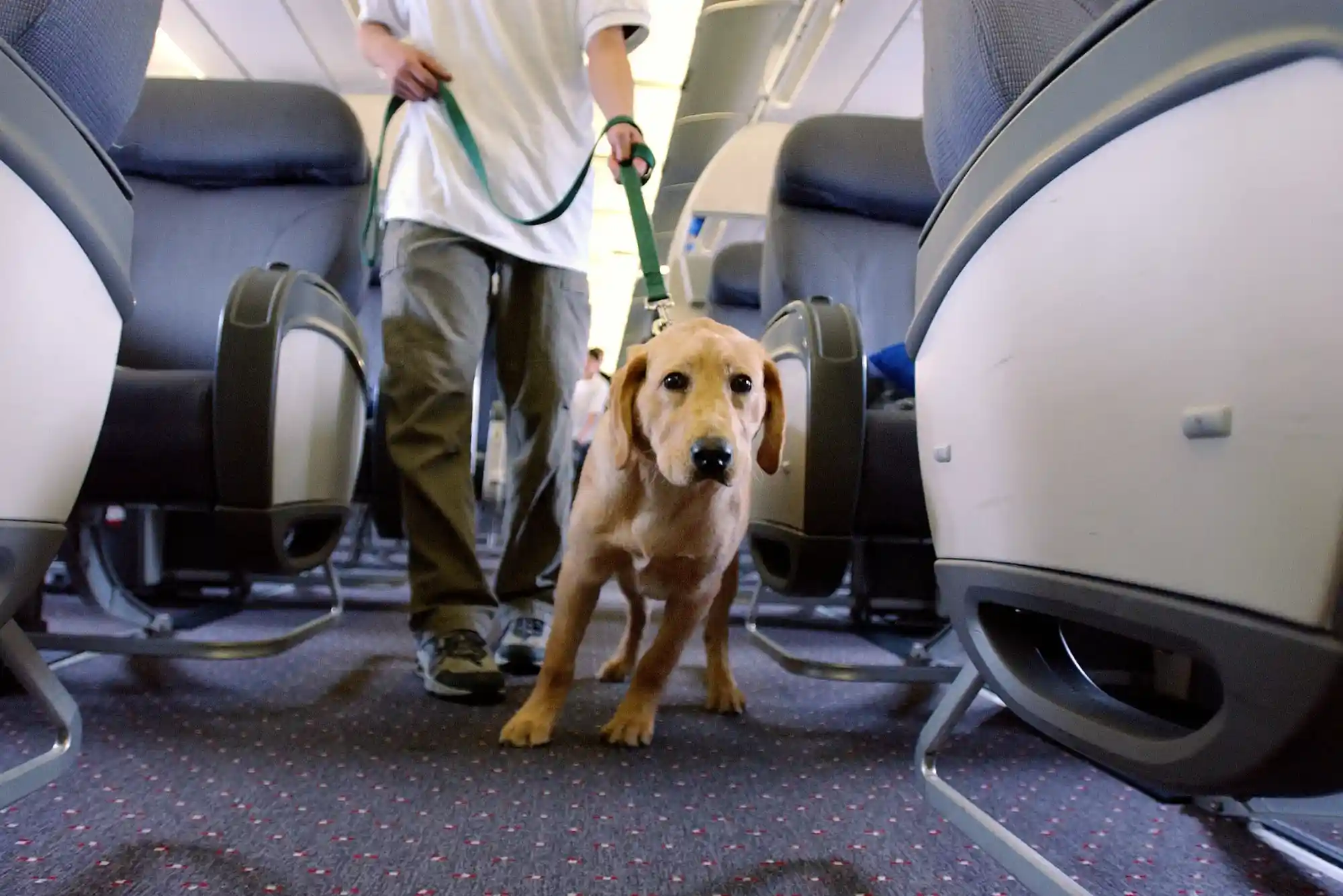
Airlines generally must permit a qualifying service dog to accompany the passenger in the aircraft cabin. However, several conditions still apply.
The dog must remain under the handler’s control. It must behave appropriately in public settings. It must not create a direct safety threat or significantly disrupt cabin operations.
Airlines may also require the dog to fit within the handler’s foot space. The airline can refuse transportation when the dog presents qualifying safety or behavioral problems.
Therefore, knowing how to fly with an Emotional Support Animal (ESA) vs Psychiatric Service Dog (PSD) requires more than knowing the animal’s label. The animal’s actual function, training, and behavior matter.
What Documentation Does a Psychiatric Service Dog Need?
Airlines can require DOT service animal forms for qualifying service dogs. These forms address important issues such as the dog’s health, behavior, and training.
The current DOT Service Animal Air Transportation Form asks the handler to provide information about the animal and its rabies vaccination. It also includes attestations regarding task training and public behavior training.
The airline may require the form to be submitted before travel. When a reservation is made more than 48 hours before departure, an airline can require submission up to 48 hours before the flight.
If travel is booked within 48 hours of departure, the airline cannot require advance submission of the form. The passenger can provide it at the departure gate instead.
For flights lasting eight hours or longer, an airline may also require a relief attestation. This addresses whether the service dog can avoid relieving itself during the flight or do so hygienically.
Because requirements can differ by airline process, travelers should always verify the current instructions directly with their carrier.
How Should You Prepare an ESA for Air Travel?
Preparing an ESA for a flight begins with understanding the airline’s pet policy. Do not assume an ESA letter guarantees cabin access.
First, check whether your airline accepts animals in the cabin on your specific route. Then review its carrier dimensions, weight restrictions, fees, vaccination requirements, and booking procedures.
Your animal should also be comfortable with its carrier if one is required. A stressful airport environment can be challenging for animals that are not accustomed to crowds and unfamiliar sounds.
It is also sensible to prepare food, water, waste supplies, medication if prescribed by a veterinarian, and familiar comfort items. However, follow airline security and cabin requirements for all items.
For international flights, investigate the destination country’s animal-entry rules well before departure. Health certificates, vaccination records, microchips, permits, or quarantine requirements may apply.
How Should You Prepare a Psychiatric Service Dog?
Preparing a psychiatric service dog requires a different approach. The dog should already have reliable task training and strong public-access behavior.
Airports expose dogs to crowds, luggage, announcements, security procedures, elevators, aircraft noise, and unfamiliar people. A service dog should remain calm and responsive despite these distractions.
The dog should also understand its working role throughout the journey. It should not wander around the cabin, approach other passengers, bark repeatedly, or create disruptions.
DOT guidance distinguishes task training from ordinary obedience or behavior training. Task training means the dog performs a specific action that helps mitigate the handler’s disability.
Therefore, basic obedience alone does not establish psychiatric service dog status.
What Happens at Airport Security?
Airport security procedures can vary depending on the airport and country. Travelers should follow instructions from security personnel while keeping the animal under control.
A service dog may normally remain with its handler during security screening, subject to the applicable security process. An ESA traveling under a pet policy may have to follow different procedures.
Arriving early can reduce unnecessary stress. This is particularly useful when traveling with an animal that needs extra time for bathroom breaks or adjustment.
Before entering the terminal, consider giving the animal an opportunity to relieve itself. Many airports provide designated animal relief areas.
Planning this part of the journey is particularly important for longer flights. It can help make the airport experience calmer for both the passenger and the animal.
Can a Service Dog Sit on the Passenger’s Lap?
A service dog generally needs to remain in the handler’s foot space or another approved location. Airlines may have specific requirements concerning where the dog can stay during the flight.
The animal cannot block an aisle or emergency exit. The handler must also maintain control throughout the journey.
A larger dog may create additional seating challenges. Therefore, contacting the airline in advance is useful when the dog needs more space.
Passengers should explain their accommodation needs clearly. Early communication can help airline staff understand the situation before the travel date.
What Is the Difference Between an ESA and a PSD?
The primary difference is task training. An ESA provides emotional comfort, while a PSD performs trained disability-related tasks.
This distinction affects how airlines handle the animals. Under current DOT rules, an ESA is not a service animal for air travel. A qualifying psychiatric service dog is treated as a service animal.
The difference also affects documentation. An ESA may need to meet an airline’s pet requirements. A PSD may be subject to DOT service animal forms.
Another important difference is terminology. Calling an ESA a service dog does not change its legal classification.
Likewise, obtaining an online certificate does not transform a pet or ESA into a psychiatric service dog. The relevant issue is whether the dog is individually trained to perform qualifying tasks.
How to Fly With an ESA or PSD on International Flights
International travel requires additional planning because another country’s laws may apply.
A service dog recognized under U.S. rules may still need veterinary documentation or import approval in another country. Destination authorities can impose requirements involving vaccinations, identification, health certificates, or quarantine.
An ESA can face additional restrictions because it may be treated as a pet. Airline policies can also differ significantly between international and domestic routes.
For this reason, travelers should check both the airline’s rules and the destination country’s official animal-entry requirements.
Do this well before departure. Some documents and veterinary procedures require advance appointments and processing time.
Common Mistakes to Avoid When Flying With an Animal
One common mistake is assuming that an ESA and PSD have identical rights. They do not have the same status under current U.S. airline rules.
Another mistake is relying on an online ESA registration. Such registration does not establish psychiatric service dog status.
Travelers also sometimes overlook airline-specific procedures. Even when federal rules provide service-animal protections, airlines can require permitted documentation and enforce safety and behavior requirements.
Another problem occurs when a dog has not been adequately prepared for airport conditions. A dog that cannot remain calm in public may create serious travel difficulties.
Finally, avoid waiting until the day of departure to investigate requirements. Last-minute problems can be difficult to resolve, especially on international itineraries.
Frequently Asked Questions
Is an emotional support animal considered a service animal on a plane?
No. Under current U.S. DOT rules, emotional support animals are not considered service animals for air transportation. Airlines may transport ESAs under their pet policies.
Can a psychiatric service dog fly in the cabin?
Yes. A qualifying psychiatric service dog can accompany a passenger with a disability in the aircraft cabin. The dog must satisfy applicable service-animal requirements and remain under control.
Do psychiatric service dogs need a doctor’s letter to fly?
Not generally under the current DOT service-animal framework. Airlines may require the applicable DOT service animal forms instead.
Can an airline charge a pet fee for a psychiatric service dog?
A qualifying service dog is not treated as an ordinary pet simply because it assists with a psychiatric disability. However, the airline can impose applicable requirements when the dog does not meet service-animal standards.
Can an ESA fly for free?
Not necessarily. Because an ESA is not a service animal under current DOT rules, an airline may handle it under its pet policy. That can include applicable pet fees and carrier requirements.
How early should I contact the airline about a service dog?
Contacting the airline as early as possible is recommended. An airline may require certain DOT forms up to 48 hours before departure when the reservation was made sufficiently early.
Conclusion
Understanding how to fly with an Emotional Support Animal (ESA) vs Psychiatric Service Dog (PSD) can prevent confusion and stressful surprises at the airport.
An ESA provides emotional comfort but does not receive service-animal status under current U.S. DOT air travel rules. A psychiatric service dog must be individually trained to perform tasks related to a person’s disability. Qualifying PSDs receive broader protections when flying.